Pressure And Filling Vessel
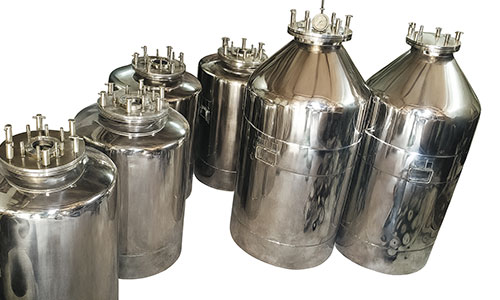
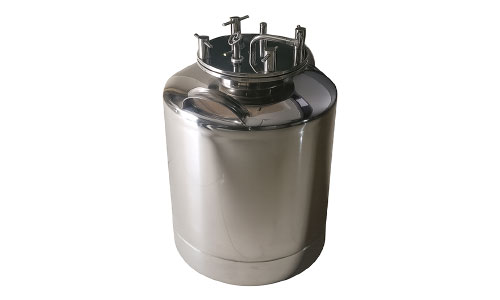
A reliable pressure vessel keeps your product moving safely from preparation to filtration. A filling vessel keeps the filtered product sterile until it reaches the filling machine. SA Pharma Process Equipment designs both in SS 316L for pharma, biotech and injectable plants. Every unit is crevice-free and ready for CIP and SIP.
Pressure Vessel vs Filling Vessel: How They Work Together
In a sterile filtration train, each vessel has a distinct job. The pressure vessel feeds the line. The filling vessel protects the filtrate.
A typical sequence is: holding or pressure vessel → membrane filter holder → sterile filling vessel → filling machine. Gas pressure pushes the bulk solution through the 0.2 µm filter. The filtrate then collects in the filling vessel, close to the Grade A/B filling zone.
| Aspect | Pressure Vessel | Filling Vessel |
|---|---|---|
| Position in train | Upstream of the filter | Downstream of the filter |
| Main role | Pressurized transfer of bulk solution | Sterile holding and feed to filler |
| Product state | Pre-filtration | Sterile filtrate |
| Pressure duty | Higher, to drive filtration | Lower, for gentle feed |
Key Features
- Crevice-free internal welds – remove product hold-up and microbial harborage points.
- Electropolished mirror finish – cuts residue adhesion and speeds up cleaning.
- SS 316L contact parts – resist chloride pitting through repeated CIP and SIP cycles.
- Dished top and bottom heads – drain fully and avoid dead zones.
- Tri-clover (TC) connections – allow quick, tool-light assembly and clean breaks.
- Dip tube with full-drain design – lets you draw product down to a minimal residual volume.
- Safety valve and pressure gauge – protect operators and keep pressure within validated limits.
- Sterile vent port with filter option – supports pressure equalization without contamination.
- Trolley with locking castors – lets one vessel serve several rooms safely.
- Full vacuum rating – supports steam-out recovery after in-situ SIP.
Technical Specifications
Typical industry values. Final values depend on your URS and are confirmed in the approved drawing.
| Parameter | Pressure Vessel | Filling Vessel |
|---|---|---|
| Capacity range | 5 L – 500 L (larger on request) | 5 L – 500 L (larger on request) |
| Design pressure | 6 bar(g) | 4 bar(g) |
| Working pressure | Up to 4 bar(g) | 0.2 – 2.5 bar(g) |
| Vacuum rating | Full vacuum (−1 bar(g)) | Full vacuum (−1 bar(g)) |
| Temperature | −10 °C to 150 °C (SIP at 121–135 °C) | −10 °C to 150 °C (SIP at 121–135 °C) |
| Shape / design | Vertical cylindrical | Vertical cylindrical |
| Top / bottom configuration | Dished top with sanitary cover; dished or conical bottom | Dished top with sanitary cover; conical bottom for full drain |
| Contact-part MOC | SS 316L | SS 316L |
| Non-contact MOC | SS 304 or SS 316L | SS 304 or SS 316L |
| Internal finish | Electropolished, Ra ≤ 0.4 µm | Electropolished, Ra ≤ 0.4 µm |
| External finish | Satin or matt, Ra ≤ 0.8 µm (mirror optional) | Satin or matt, Ra ≤ 0.8 µm (mirror optional) |
| Gasket material | Platinum-cured silicone, EPDM or PTFE (FDA 21 CFR 177.2600, USP Class VI grades) | Platinum-cured silicone, EPDM or PTFE (FDA 21 CFR 177.2600, USP Class VI grades) |
| Connections | Tri-clover (TC) sanitary clamp | Tri-clover (TC) sanitary clamp |
| Nozzles | Inlet, outlet / dip tube, gas pressure inlet, vent, safety valve, pressure gauge | Inlet, outlet / dip tube, sterile gas inlet, vent with filter port, safety valve, pressure gauge |
| Mobility | Trolley with castors, or fixed skirt / legs | Trolley with locking castors, or fixed skirt / legs |
| Optional accessories | Load cells, level indicator, sight glass, spray ball, jacket | Load cells, level indicator, sight glass, spray ball, jacket |
| Documentation supplied | MTCs, weld log, Ra report, hydro test certificate, drawings, DQ/IQ/OQ support | MTCs, weld log, Ra report, hydro test certificate, drawings, DQ/IQ/OQ support |
Benefits for Pharmaceutical Manufacturers
- Lower contamination risk: Smooth, crevice-free surfaces leave fewer places for bioburden to settle.
- Faster changeover: Electropolished surfaces clean quickly, so rooms return to production sooner.
- Audit readiness: Traceable materials and complete test records answer inspector questions on the spot.
- Operator safety: Rated pressure, safety valves and gauges keep pressurized transfer under control.
- Less product loss: Full-drain bottoms and dip tubes recover costly parenteral batches.
- Flexible layouts: Mobile trolleys let one vessel serve filtration, buffer prep and pilot work.
Applications
- Small-volume parenterals (SVPs) and ampoule filling
- Large-volume parenterals (LVPs)
- Ophthalmic solutions and eye drops.
- Vaccines and biologics, including buffer and media hold
- API solution transfer between process steps
- Buffer and media preparation for membrane filtration
- Soft gelatin fill liquids
- R&D, pilot and clinical trial batches
Customization Options
- Jacketed versions for heating or cooling of temperature-sensitive solutions
- Load cells for weight-based batch control and dosing accuracy
- Level indicators and sight glass for clear in-process visibility
- Spray ball for better CIP coverage in larger sizes
- Custom nozzle orientation and sizes to match your skid or filling machine
- Special capacities outside the standard range, built to your URS